
Kerala Council for Historical Research
A digital archive of Kerala’s past
Manuscripts, records and inscriptions, read, transcribed and opened to anyone with a question. Every piece of history deserves a future.
Explore KCHR Archive Repository50,000+
documents digitised
7
languages and scripts
22
kinds of record held
Open
to researchers everywhere
A council built to keep the record whole
The Kerala Council for Historical Research is an autonomous institution, recognised by the University of Kerala and funded by the state’s Ministry of Higher Education. Its work spans research, documentation, training in epigraphy and palaeography, and, increasingly, the quiet, patient labour of digitisation.
Every scanned page, every transcription, every corrected line belongs to that same effort: making sure Kerala’s history survives in a form the next generation can search, read and question, not just store.
What the archive holds
Languages and scripts
മലയാളം
Malayalam
വട്ടെഴുത്ത്
Vattezhuthu
കോലെഴുത്ത്
Kolezhuthu
തമിഴ്
Tamil
സംസ്കൃതം
Sanskrit
സുറിയാനി
Syriac
ഇംഗ്ലീഷ്
English
Paper fades. Memory shouldn’t.
Palm leaf cracks. Ink migrates. Damp, insects and time work quietly against every page held in a collection. Each document that goes undigitised is a record living on borrowed time, and once it is gone, the account it carried is gone with it.
A scan alone is only a photograph of a page. What turns fifty thousand images into an archive is the reading of them, and that is where machine assistance earns its place: not to replace the historian, but to do the patient work first.
What this protects is not paper. It is the account Kerala keeps of itself: the land grant, the letter between brothers, the school register, the diary entry no one thought worth saving.
How a document reaches the repository
- 1
Handled once
The original is photographed with care and returned to storage. Every later reading happens on the copy.
- 2
Read and transcribed
Each page is rendered as text, with machine assistance doing the patient first pass for the historian.
- 3
Described and indexed
Summaries, dates, places and persons are recorded so the document can be found by what it contains.
- 4
Opened to search
The record joins the Search Repository, where anyone with a question can find it.
Among KCHR’s aims: to make the best use of electronic media and information technology in sharing historical knowledge worldwide.
Begin with a name, a place or a year
The Archive Repository reads across every digitised document, in every script the archive holds.
Have a researcher account? Log in to search the repository and open full documents.
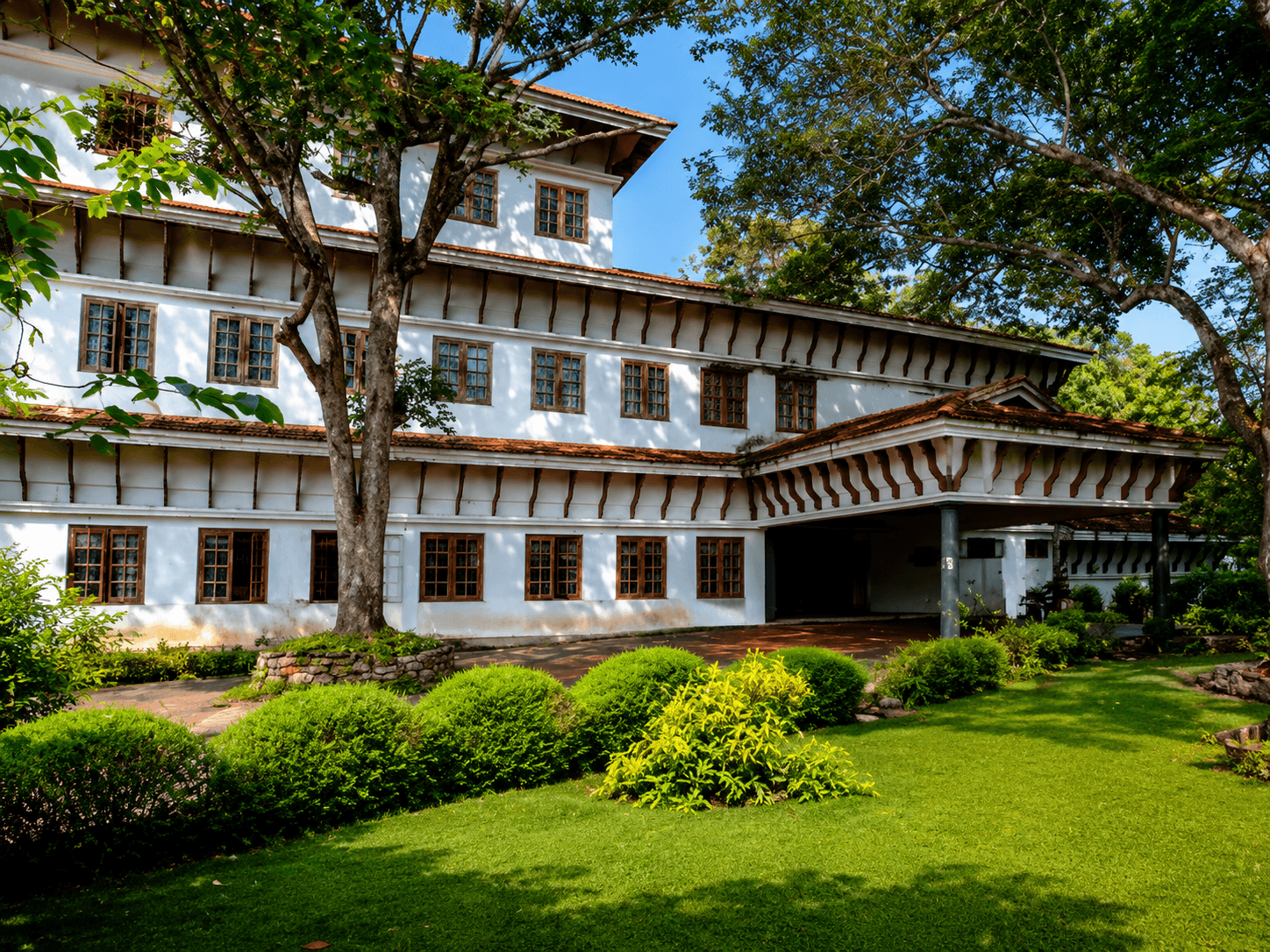
Visit the Council
An autonomous institution committed to scientific research in history and the social sciences. Research, publication, documentation, training and co-ordination are its major domains.
- Address
- PB No. 839, Vyloppilly Samskrithi Bhavan,
Nalanda, Thiruvananthapuram,
Kerala 695 003, India - Getting there
- Between PMG junction and Nanthancode. About 12 km from Trivandrum airport, and under 5 km from the railway and bus stations.
- The building
- KCHR is housed in the blocks named for K. P. Padmanabha Menon and Prof. Elamkulam Kunjan Pillai, pioneering researchers of Kerala history.
- Study and research
- Doctoral, post-doctoral and internship programmes, with short courses in research methods, epigraphy, palaeography and numismatics.
Nalanda, Thiruvananthapuram
Open in Maps